Original Industrial Spare Part
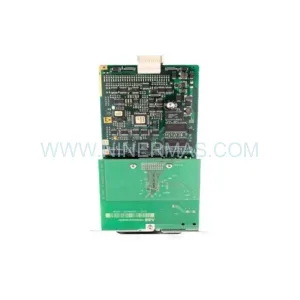
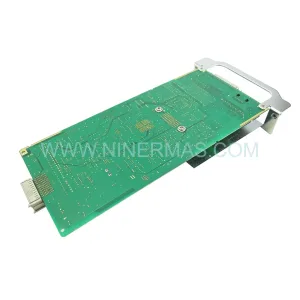
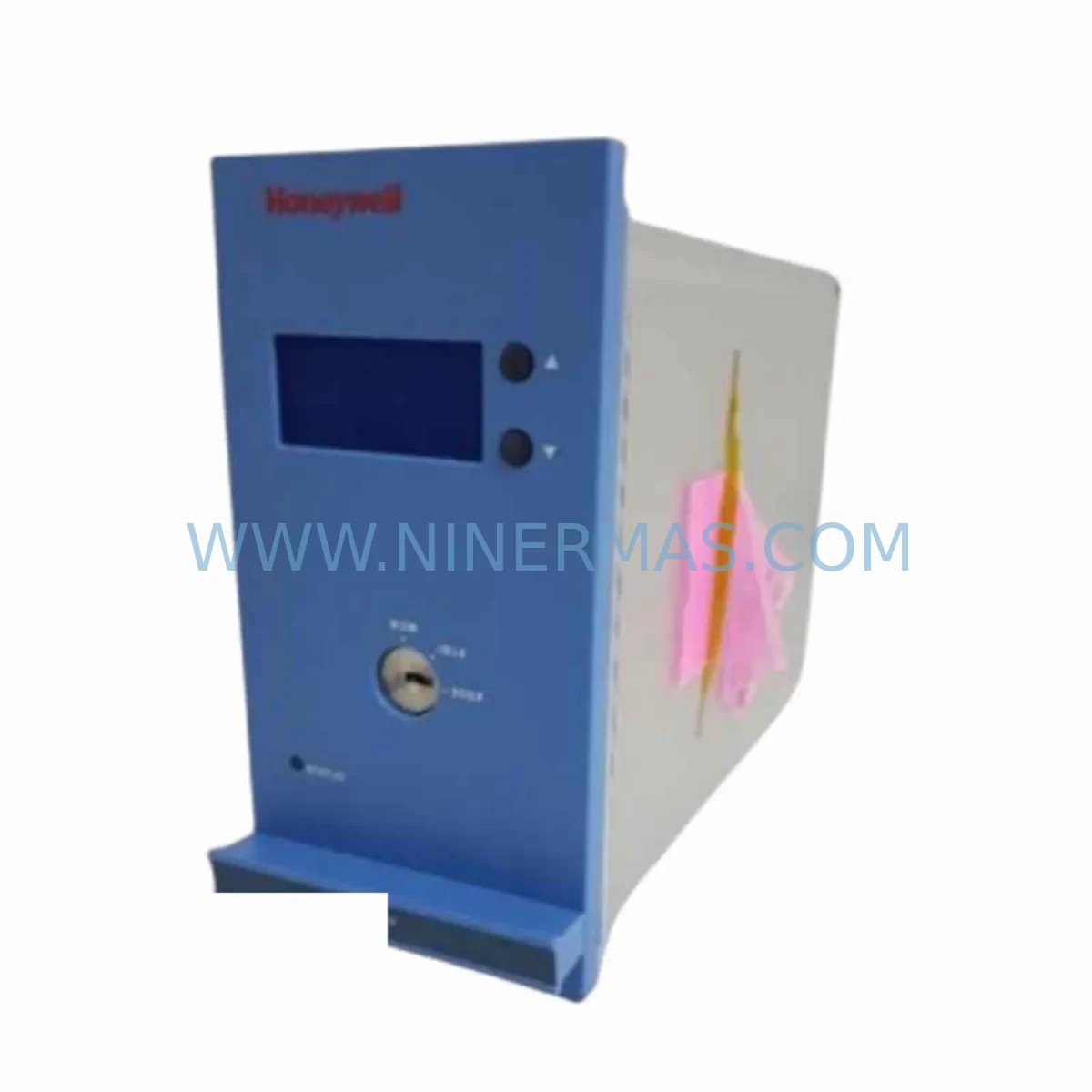
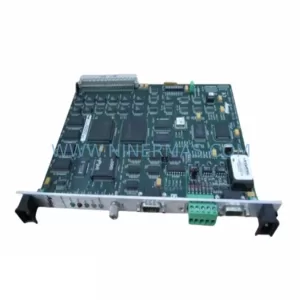
Honeywell FC-QPP-0002 V2.0 Retrofit-Compatible QPP for Legacy Safety Manager
Verify the part, confirm the platform family, and move straight into quotation with the right commercial details.
RFQ Ready
- SKUFC-QPP-0002 V2.0
- CategorySIS Safety & Redundancy Systems
- BrandHoneywell
- SupportAvailability, lead time, condition, and shipping coordination
How Buyers Usually Use This Page
- Confirm the exact part number and platform family before sending the quote request.
- Use direct email when quantity, condition, and destination are already defined internally.
- Switch to the broader brand or category archive when you need alternates nearby.
Series Navigation
Move through the most common platform families behind this part.
Product RFQ
Send this part directly for quotation.
Include quantity, required condition, destination country, and target delivery timing. Current reference: Honeywell FC-QPP-0002 V2.0 Retrofit-Compatible QPP for Legacy Safety Manager with SKU FC-QPP-0002 V2.0.
Honeywell FC-QPP-0002 V2.0 Retrofit-Compatible QPP for Legacy Safety Manager FC Series
The Honeywell FC-QPP-0002 V2.0 is a Qualified Power and Processor (QPP) module engineered for the Safety Manager FC Series platform — one of Honeywell’s most widely deployed safety instrumented systems (SIS) in process industries including oil & gas, petrochemical, power generation, and offshore platforms. As legacy Safety Manager installations approach end-of-life or require spare-part replenishment, the FC-QPP-0002 V2.0 remains a critical component for maintaining SIL 2-certified safety loop integrity without requiring a full system replacement.
NINERMAS maintains verified in-stock inventory of the FC-QPP-0002 V2.0, sourced through authorized industrial channels, and ships with a 12-month warranty covering manufacturing defects and functional performance. Each unit undergoes pre-shipment functional verification to confirm processor initialization, power rail stability, and backplane communication readiness before dispatch.
Upgrade Compatibility Table
| Parameter | FC-QPP-0002 V2.0 (This Unit) | Retrofit Notes |
|---|---|---|
| Module Type | Qualified Power & Processor (QPP) | Direct slot-compatible with Safety Manager FC chassis |
| Platform Compatibility | Honeywell Safety Manager FC Series | Verify chassis generation (FC-RKCX-0002 or FC-RKCX-0004 rack) |
| Firmware Version | V2.0 | Confirm Safety Builder project compatibility before swap |
| Backplane Interface | FC Series proprietary backplane bus | No adapter required; direct insertion into QPP slot |
| Power Supply Input | 24 VDC (from FC-PSU module) | Verify FC-PSU-0001 or FC-PSU-0002 output capacity before replacement |
| Communication Links | Ethernet (Safety Network), RS-485 (legacy) | Confirm IP addressing and Safety Network Controller (SNC) mapping |
| SIL Rating | SIL 2 (IEC 61508 certified) | Functional safety validation required post-installation |
| Installation Space | Standard FC Series module footprint | No cabinet modification required for like-for-like swap |
| Replacement Scope | FC-QPP-0002 V1.x → V2.0 upgrade | Review Honeywell TIL for V1.x-to-V2.0 migration checklist |
| Warranty | 12 Months — Covers manufacturing defects and functional performance from date of shipment | |
Retrofit Planning for Existing Automation Systems
Replacing the FC-QPP-0002 V2.0 in an operational Safety Manager installation requires careful pre-engineering to avoid unplanned shutdowns and to preserve the integrity of the safety instrumented functions (SIFs) already validated in the system. The QPP module serves as the central processor and power distribution hub for the FC chassis — meaning its replacement directly affects every I/O module, communication link, and safety loop running through that rack.
Before initiating the swap, engineers should audit the FC-PSU-0001 or FC-PSU-0002 power supply module to confirm that the 24 VDC rail is within specification and that the power budget accommodates all installed modules, including any FC-DI-0016 digital input modules and FC-DO-0008 digital output modules currently active in the rack. Overloaded power rails are a common root cause of QPP instability in aging installations.
The backplane connection between the QPP and the rack — typically an FC-RKCX-0004 four-slot chassis or an FC-RKCX-0002 two-slot chassis — must be inspected for corrosion, bent pins, or contamination before the new module is seated. Any backplane damage that went undetected during normal operation can cause intermittent faults after a module swap, complicating post-installation diagnostics.
Communication continuity is equally critical. The FC-QPP-0002 V2.0 manages the Ethernet link to the Safety Network Controller (FC-SNC-0001) and, in some configurations, maintains an RS-485 serial link to legacy Experion PKS or TDC 3000 DCS platforms. Before the replacement, document all IP addresses, node IDs, and Safety Network segment assignments. After installation, the SNC must re-establish communication with the QPP before any safety function can be re-enabled — this step is often overlooked and can extend commissioning time if not pre-planned.
For sites running Honeywell Safety Builder as the engineering tool, the project file must be verified against the V2.0 firmware baseline. If the existing project was compiled under an earlier Safety Builder release, a compatibility check is mandatory. In some cases, a project re-download to the new QPP is required, which means the safety system must be in a controlled maintenance state — not simply powered down — to avoid triggering spurious trips on connected field devices.
I/O signal continuity during the transition is best managed by pre-configuring bypass or inhibit states for critical SIFs through the Honeywell Safety Manager Operator Interface or through the DCS, where permissible under the site’s Management of Change (MOC) procedure. This approach allows the physical module swap to proceed without triggering automatic ESD or process shutdown actions tied to the affected safety loops.
For installations that also include FC-AI-0008 analog input modules handling 4–20 mA transmitter signals, engineers should verify that the analog signal reference ground is stable after the QPP replacement, as ground potential shifts can introduce measurement offsets that affect SIF trip setpoints. Signal isolators installed upstream of the FC analog inputs provide an additional layer of protection during the transition period.
Downtime Control During System Migration
Minimizing downtime during a QPP module replacement in a live Safety Manager installation is achievable with disciplined pre-planning. The most effective strategy is to treat the replacement as a planned maintenance event with a defined maintenance window — typically coordinated with a scheduled process shutdown or a turnaround — rather than an emergency corrective action.
The physical swap of the FC-QPP-0002 V2.0 itself takes less than 15 minutes for a trained technician familiar with the FC chassis. The majority of the downtime risk lies in the post-installation steps: firmware verification, Safety Builder project download, SNC communication re-establishment, I/O module re-initialization, and functional safety validation of each SIF before the system is returned to operational mode.
To protect the original program logic, always export a full backup of the Safety Builder project — including all SIF configurations, cause-and-effect matrices, and bypass states — before removing the existing QPP. Store this backup on an isolated engineering workstation, not on a network share, to prevent accidental overwrite during the commissioning process. If the replacement QPP arrives with a factory-default firmware image, the Safety Builder download sequence must follow the exact procedure specified in the Honeywell FC Series Installation and Commissioning Guide to avoid partial configuration states that can cause the QPP to enter a fault mode on first power-up.
Field control continuity during the migration window can be maintained by coordinating with the DCS operator to hold process setpoints manually and by ensuring that all field devices connected to the Safety Manager are in a known, safe state before the QPP is removed. For critical loops — such as high-pressure shutdown or fire-and-gas detection circuits — a temporary hardwired bypass approved under the site’s PTW (Permit to Work) system may be appropriate to maintain process safety during the maintenance window.
Post-installation, a structured loop check covering all digital inputs, digital outputs, and analog inputs connected to the replaced QPP’s rack is essential before returning the system to automatic mode. This check confirms that terminal wiring integrity was not disturbed during the module handling and that all I/O addresses are correctly mapped in the restored Safety Builder project.
Retrofit Support FAQ
Q1: Is the FC-QPP-0002 V2.0 a direct replacement for FC-QPP-0002 V1.x units?
The V2.0 is mechanically and electrically compatible with the same FC Series chassis slots used by V1.x units. However, a firmware and Safety Builder project compatibility review is required before installation. In most cases, a project re-download using Safety Builder is necessary to align the project baseline with the V2.0 firmware. Honeywell’s Technical Information Letter (TIL) for this transition should be reviewed as part of the MOC process.
Q2: What pre-shipment testing does NINERMAS perform on the FC-QPP-0002 V2.0?
Each unit is tested for processor initialization, 24 VDC power rail stability, backplane communication readiness, and Ethernet port functionality before shipment. Units that do not pass all functional checks are quarantined and not dispatched. A test report is available upon request for quality-critical procurement processes.
Q3: Can the FC-QPP-0002 V2.0 be installed without a full system shutdown?
A controlled maintenance state — with all affected SIFs placed in bypass or inhibit mode under an approved PTW — is required before the QPP is removed. A full process shutdown is not always necessary, but the safety system must not be in automatic operational mode during the physical swap. Site-specific MOC and safety procedures govern the exact requirements.
Q4: What is covered under the 12-month warranty?
The 12-month warranty covers manufacturing defects and functional performance failures under normal operating conditions from the date of shipment. It does not cover damage resulting from incorrect installation, overvoltage events, or unauthorized modification. Warranty claims are processed through NINERMAS directly — contact sale@ninermas.com with the order reference and a description of the observed fault.
| Product Series | Safety Manager |
|---|---|
| Country of Origin | US |
Catalog Continuation
Likely FSC Safety Manager platform matches.
These parts are closer to the same platform family signaled by the current SKU and title, so buyers can validate continuity before sending a final RFQ.
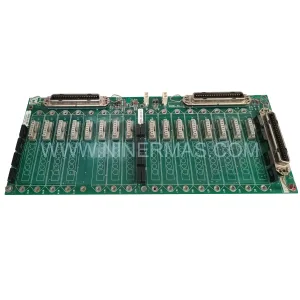
SKU: FC-FE-USI-0002 V1
Honeywell FC-FE-USI-0002 V1 Retrofit Safety Manager Module
SKU: FS-SICC-0001/L6 L5 L3
Honeywell FS-SICC-0001/L6 Industrial Maintenance Spare Part
Catalog Continuation
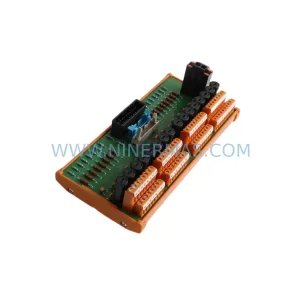
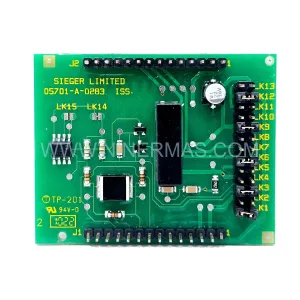
More Honeywell modules in the catalog.
Use the brand lane to compare nearby part numbers, platform-adjacent modules, and other inquiry-ready listings before sending your final RFQ.
Catalog Continuation
Alternative parts within SIS Safety & Redundancy Systems.
Stay inside the same system family when you need substitutes, adjacent modules, or a broader shortlist for procurement review.
SKU: VIPA315-2DP01 CPU315DPM
VIPA 315-2DP01 Safety-Reliable CPU for Critical Control
SKU: CDN500R-10 0190-37771
MKS CDN500R-10 0190-37771 Service-Ready Spare Part
SKU: 4S018-713-1 NSR-S306C
NIKON 4S018-713-1 NSR-S306C Safety-Reliable Control Board
SKU: 5136-DNP-CPCI
SST 5136-DNP-CPCI Safety-Reliable DeviceNet Interface Module