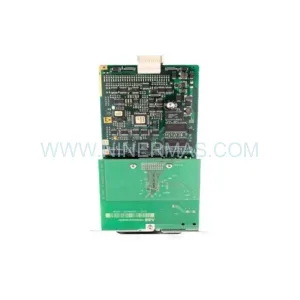
Original Industrial Spare Part
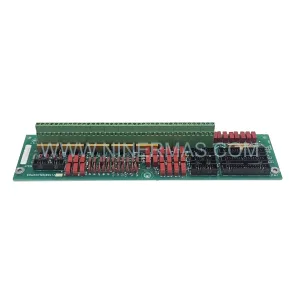
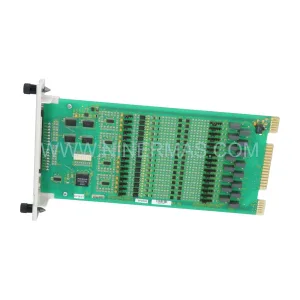
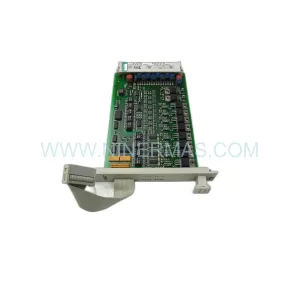
Honeywell HC-SDS720 Retrofit-Compatible Safety Controller
Verify the part, confirm the platform family, and move straight into quotation with the right commercial details.
RFQ Ready
- SKUHC-SDS720
- CategorySIS Safety & Redundancy Systems
- BrandHoneywell
- SupportAvailability, lead time, condition, and shipping coordination
How Buyers Usually Use This Page
- Confirm the exact part number and platform family before sending the quote request.
- Use direct email when quantity, condition, and destination are already defined internally.
- Switch to the broader brand or category archive when you need alternates nearby.
Series Navigation
Move through the most common platform families behind this part.
Product RFQ
Send this part directly for quotation.
Include quantity, required condition, destination country, and target delivery timing. Current reference: Honeywell HC-SDS720 Retrofit-Compatible Safety Controller with SKU HC-SDS720.
Honeywell HC-SDS720 Retrofit-Compatible Safety Controller: Legacy System Compatibility & Smooth Upgrade
The Honeywell HC-SDS720 is a safety domain station designed for integration within the Experion PKS (Process Knowledge System) platform, specifically targeting R720-series control architectures. For facilities operating aging distributed control systems (DCS) or safety instrumented systems (SIS) built around the Honeywell Safety Manager or earlier HC-series hardware, the HC-SDS720 represents a validated, drop-in-compatible upgrade path that preserves existing program logic, field wiring, and operator interface configurations while delivering modern safety certification compliance.
Industrial plants running legacy Honeywell TDC 3000, PlantScape, or early Experion R400/R500 environments frequently encounter end-of-life (EOL) notices on safety controllers, I/O modules, and communication cards. The HC-SDS720 addresses this challenge directly by maintaining backward compatibility with existing HC-series backplane architectures, allowing engineering teams to execute phased retrofits without requiring a full control system replacement. This is particularly valuable in continuous process industries — refining, petrochemical, power generation, and specialty chemical — where unplanned downtime carries significant operational and safety risk.
Upgrade Compatibility Table
| Parameter | HC-SDS720 Specification | Retrofit Notes |
|---|---|---|
| Platform Compatibility | Experion PKS R720 and above | Verify firmware revision on existing Experion server before installation |
| Backplane Interface | HC-series universal backplane slot | Compatible with HC-BPSX and HC-BPSX-E backplane variants; confirm slot addressing |
| Communication Protocol | FTE (Fault Tolerant Ethernet) / ControlNet | Existing ControlNet coax or FTE switch infrastructure can be retained |
| Power Supply Requirement | 24 VDC, redundant input supported | Verify HC-PSUX power supply capacity; add HC-PSUX-R redundant unit if required |
| I/O Expansion | Supports HC-SDI/O series digital safety I/O modules | Existing HC-SDI16 and HC-SDO16 modules remain compatible without rewiring |
| Installation Footprint | Standard HC-series single-slot module | No cabinet modification required for like-for-like slot replacement |
| Safety Certification | IEC 61508 SIL 2 / SIL 3 capable | Confirm SIL level with existing SIS functional safety assessment documentation |
| Programming Environment | Honeywell Safety Builder / Control Builder | Existing Safety Builder projects can be imported; validate logic after migration |
| HMI Compatibility | Experion Station / Flex Station | Existing operator displays and alarm configurations are preserved |
| Warranty | 12-Month Warranty | Covers hardware defects; includes pre-shipment functional test report |
Retrofit Planning for Existing Automation Systems
A successful HC-SDS720 retrofit begins well before the module arrives on site. Engineering teams should start by auditing the existing control cabinet layout to confirm available backplane slot positions, verify that the HC-BPSX backplane revision supports the SDS720 module addressing scheme, and document all existing terminal block wiring assignments against the current I/O list. In most R400 and R500 era installations, the field wiring connected to HC-SDI16 digital input modules and HC-SDO16 digital output modules can be retained without modification, significantly reducing the scope of the physical changeover.
Power budget verification is a critical pre-retrofit step. The HC-PSUX power supply module feeding the safety domain must have sufficient headroom to support the HC-SDS720 alongside any co-installed HC-SDI/O expansion modules. Where redundant power is required by the site’s functional safety plan, an HC-PSUX-R redundant power supply should be installed in parallel prior to the controller swap. This ensures that the power infrastructure upgrade does not introduce a single point of failure during the transition window.
Communication infrastructure assessment is equally important. Sites running legacy ControlNet networks should verify that the existing ControlNet scanner configuration in the Experion server recognizes the HC-SDS720 node address. For sites already migrated to Fault Tolerant Ethernet (FTE), the existing FTE switch fabric — typically built around Honeywell-qualified managed switches — requires no modification, as the HC-SDS720 presents the same FTE node behavior as its predecessors. Where a site is simultaneously migrating from ControlNet to FTE as part of the retrofit, the HC-CNIX ControlNet interface module and FTE cabling should be staged and tested independently before the safety controller cutover.
Program logic migration deserves careful attention. Safety Builder project files from earlier HC-series safety controllers can be imported into the current Safety Builder environment, but engineers must perform a full logic comparison and validation against the original functional safety requirements specification (FSRS). Any changes to I/O module addressing — particularly if slot positions have shifted — must be reflected in the Safety Builder I/O assignment tables before downloading to the HC-SDS720. The Experion Control Builder configuration for the associated process controllers, such as the C300 controller or HC-900 hybrid controller nodes on the same network, should also be reviewed to confirm that safety interlock cross-references remain intact after the SDS720 replacement.
HMI display verification is the final pre-cutover checkpoint. Experion Station and Flex Station operator displays that reference safety domain points sourced from the legacy safety controller must be validated against the new HC-SDS720 tag database. In most cases, point names and alarm priorities are preserved through the Safety Builder migration, but a systematic display walkthrough — covering all safety-related faceplates, group displays, and trend historians — should be completed and signed off before the system is returned to operational status.
Downtime Control During System Migration
Minimizing process downtime during an HC-SDS720 retrofit requires a structured cutover methodology. The recommended approach is to complete all pre-work — backplane preparation, power supply verification, communication configuration, and Safety Builder project validation — during normal maintenance windows, leaving the physical module swap and program download as the only activities requiring a process hold or safe state initiation.
Where the process safety plan permits, a hot-standby staging approach can be used: the HC-SDS720 is installed in a spare backplane slot and brought online in a shadow configuration, allowing the engineering team to verify FTE communication, I/O module recognition, and Safety Builder connectivity before the legacy controller is taken offline. This parallel validation step can reduce the active cutover window to under two hours in well-prepared installations.
Original program logic protection is achieved by maintaining a version-controlled archive of the Safety Builder project in both its original and migrated forms, stored on a dedicated engineering workstation and backed up to the site’s document management system. This ensures that if an unexpected compatibility issue is discovered during commissioning, the team can revert to the previous configuration without data loss. Field control continuity during the cutover is maintained by placing all associated process loops in manual mode at the Experion Station operator console, with field operators stationed at key control valves and safety shutdown devices to provide manual oversight throughout the transition.
Post-cutover commissioning should follow a structured loop check sequence: verify each HC-SDI16 input channel against the field instrument, confirm each HC-SDO16 output channel drives the correct final element, validate all safety interlock logic by simulation or field actuation as permitted by the site’s management of change (MOC) procedure, and obtain formal sign-off from the site’s functional safety engineer before returning the system to automatic control. All HC-SDS720 units supplied by NINERMAS are pre-tested prior to shipment, with a functional test report included in the delivery package to support site acceptance testing and reduce on-site commissioning time.
Retrofit Support FAQ
Q1: Is the HC-SDS720 a direct drop-in replacement for earlier HC-series safety domain stations?
In most Experion PKS R720 installations, the HC-SDS720 occupies the same backplane slot and uses the same terminal block wiring as its predecessor. However, engineers should verify the backplane revision and slot addressing configuration in Safety Builder before installation, as minor firmware differences between R-series releases can affect module recognition behavior.
Q2: Can existing Safety Builder project files be reused after the HC-SDS720 replacement?
Yes. Safety Builder project files created for earlier HC-series safety controllers are compatible with the HC-SDS720 environment. The recommended process is to import the existing project, perform a full I/O assignment review, validate all interlock logic against the functional safety requirements specification, and conduct a simulation-based acceptance test before downloading to the replacement module.
Q3: What pre-shipment testing is performed on HC-SDS720 units?
All HC-SDS720 modules supplied by NINERMAS undergo functional testing prior to shipment, including power-on self-test verification, communication port validation, and I/O channel continuity checks. A test report is included with each unit. Units are covered by a 12-month warranty against hardware defects from the date of shipment.
Q4: What is the typical lead time and inventory availability for the HC-SDS720?
NINERMAS maintains stock inventory of the HC-SDS720 to support urgent retrofit and emergency replacement requirements. Standard orders are processed and shipped within 3–5 business days. For time-critical plant shutdowns or emergency spare requirements, please contact our sales team directly to confirm current stock levels and expedited shipping options.
| Product Series | Experion PKS |
|---|---|
| Country of Origin | US |
Catalog Continuation
More Honeywell modules in the catalog.
Use the brand lane to compare nearby part numbers, platform-adjacent modules, and other inquiry-ready listings before sending your final RFQ.
Catalog Continuation
Alternative parts within SIS Safety & Redundancy Systems.
Stay inside the same system family when you need substitutes, adjacent modules, or a broader shortlist for procurement review.
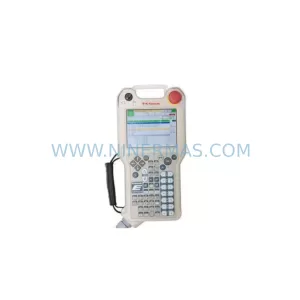
SKU: 50817-0096L05 R2AA06020FCPPJ 50601-1462
Kawasaki 50817-0096L05 Safety-Reliable Pendant for Critical Sites
SKU: 6AU1445-2AD00-0AA1
Siemens 6AU1445-2AD00-0AA1 Safety-Reliable PLC CPU for Critical Control