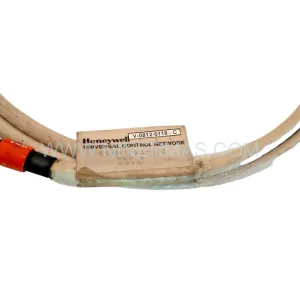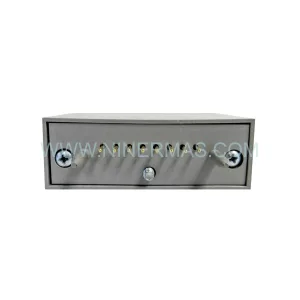
Original Industrial Spare Part
Honeywell 2MLR-DBST/SF/SH-CC Spare Part Industrial
Verify the part, confirm the platform family, and move straight into quotation with the right commercial details.
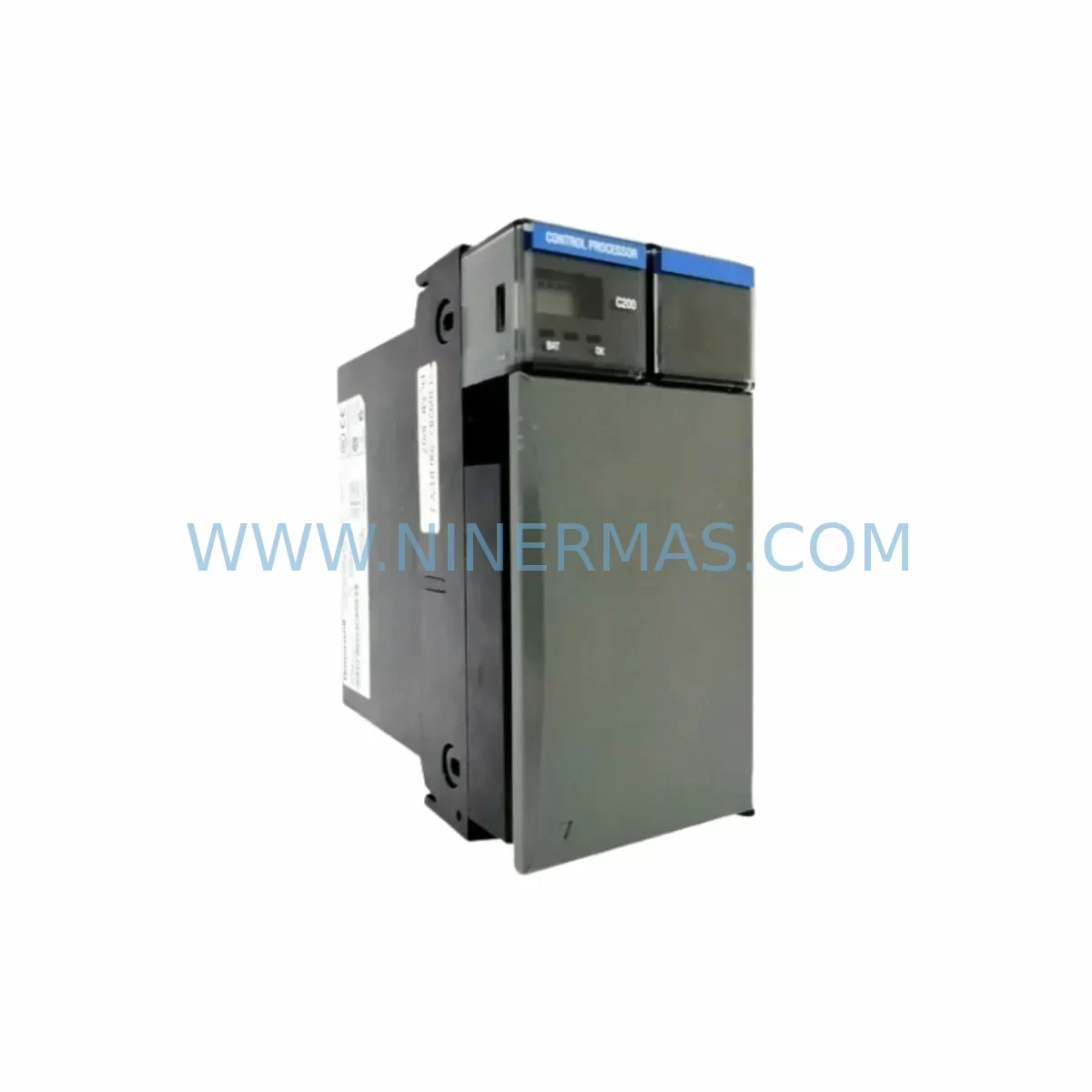
RFQ Ready
- SKU2MLR-DBST-CC 2MLR-DBSF-CC 2MLR-DBSH-CC
- CategorySIS Safety & Redundancy Systems
- BrandHoneywell
- SupportAvailability, lead time, condition, and shipping coordination
How Buyers Usually Use This Page
- Confirm the exact part number and platform family before sending the quote request.
- Use direct email when quantity, condition, and destination are already defined internally.
- Switch to the broader brand or category archive when you need alternates nearby.
Series Navigation
Move through the most common platform families behind this part.
Product RFQ
Send this part directly for quotation.
Include quantity, required condition, destination country, and target delivery timing. Current reference: Honeywell 2MLR-DBST/SF/SH-CC Spare Part Industrial with SKU 2MLR-DBST-CC 2MLR-DBSF-CC 2MLR-DBSH-CC.
Honeywell 2MLR-DBST/SF/SH-CC Spare Part Industrial Maintenance
The Honeywell 2MLR-DBST-CC, 2MLR-DBSF-CC, and 2MLR-DBSH-CC are relay driver output modules designed for the Honeywell Safety Manager series — a widely deployed Safety Instrumented System (SIS) platform used across petrochemical, oil and gas, power generation, and advanced manufacturing facilities. These modules serve as the final output interface between the safety logic solver and field-connected actuators such as solenoid valves, motor starters, and emergency shutdown devices. When a relay output module fails or degrades, the entire safety loop is at risk of nuisance trips or, more critically, failure to respond during a process hazard event. Maintaining a verified spare on the shelf is not optional — it is a fundamental requirement of any IEC 61511-compliant maintenance strategy.
Each of the three variants — DBST (standard), DBSF (fused), and DBSH (high-current) — addresses a specific field wiring and load profile. Procurement engineers should confirm the exact suffix before ordering to ensure direct drop-in compatibility with the installed base. All three variants share the same backplane connector footprint and firmware interface within the Safety Manager chassis, allowing maintenance teams to standardize their spare parts inventory across multiple cabinet configurations without stocking three entirely separate module families.
Spare Maintenance Table
| Parameter | Specification |
|---|---|
| Brand | Honeywell |
| Part Numbers | 2MLR-DBST-CC / 2MLR-DBSF-CC / 2MLR-DBSH-CC |
| Series | Safety Manager (SM) |
| Module Type | Relay Driver Output Module |
| Output Channels | 8 relay output channels per module (typical) |
| Output Voltage | 24 VDC nominal field supply |
| Safety Classification | SIL 2 / SIL 3 capable (per system configuration) |
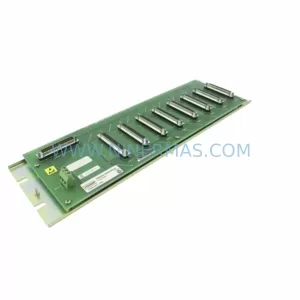
| Backplane Interface | Safety Manager chassis backplane connector |
| Operating Temperature | 0°C to +60°C |
| Humidity | 5% to 95% RH, non-condensing |
| Mounting | Safety Manager chassis slot (direct backplane mount) |
| Certifications | TÜV, IEC 61508, IEC 61511 |
| Origin | United States |
| Warranty | 12 Months — all units tested before shipment |
| Availability | In stock — long-term supply commitment available |
Maintenance Planning for Continuous Operation
A relay output module failure in a Safety Manager cabinet rarely occurs in isolation. Maintenance engineers performing a root-cause analysis after a 2MLR-DBST-CC, 2MLR-DBSF-CC, or 2MLR-DBSH-CC fault should systematically inspect the surrounding electrical environment before installing the replacement unit. Overlooking a degraded upstream component is one of the most common causes of repeat module failures within 30 to 90 days of a repair.
Begin with the Safety Manager chassis backplane itself. Backplane connector pins can develop micro-arcing damage from repeated module insertions, particularly in high-vibration environments. Inspect the backplane slot for bent pins, carbon deposits, or discoloration before seating the new module. If the chassis is a SM-CHS-0001 or equivalent Safety Manager rack, verify that the slot assignment in the system configuration file matches the physical installation position.
Next, inspect the 24 VDC field power supply feeding the relay output circuits. A sagging or noisy field supply — often sourced from a Honeywell SM-PSU-0001 or a third-party DIN-rail power supply — can cause relay coil chatter and premature contact wear. Use a calibrated multimeter to confirm supply voltage is within ±5% of nominal under full load. If the supply is shared with other output modules such as the 2MLR-DAOT-CC analog output module or the 2MLR-DDIT-CC digital input module, check for voltage droop under simultaneous switching conditions.
The field terminal blocks and wiring harness connected to the relay output channels deserve close attention. Loose terminations on the field-side connector — particularly on the DBSF fused variant — can cause intermittent open-circuit faults that are difficult to distinguish from module failures during initial diagnostics. Inspect all terminal screws for proper torque and check for signs of thermal discoloration or insulation damage on the field cables.
For the DBSH high-current variant, verify that the connected actuator loads — motor starters, large solenoid valves, or contactor coils — are within the module’s rated switching capacity. Oversized inductive loads without proper suppression diodes or RC snubbers will shorten relay contact life significantly. If the load profile has changed since the original system commissioning, consult the Safety Manager I/O module datasheet and update the maintenance record accordingly.
During annual turnaround maintenance, it is good practice to also inspect the Safety Manager communication modules in the same cabinet, such as the 2MLR-CNET-CC Ethernet communication module or the FS-SICC-0001/L8 safety network interface card. Communication faults can mask output module status in the operator HMI and delay fault detection. Similarly, verify that the Honeywell Safety Manager controller module — typically a SM-SCM-0001 or equivalent — is running the correct firmware version and that the I/O configuration database is synchronized with the physical hardware.
Procurement engineers building a comprehensive spare parts kit for a Safety Manager installation should consider stocking at minimum: one unit each of the 2MLR-DBST-CC, 2MLR-DBSF-CC, and 2MLR-DBSH-CC; one spare 2MLR-DDIT-CC digital input module; one spare 2MLR-DAOT-CC analog output module; and a replacement SM-PSU-0001 power supply. This kit covers the most common failure modes and supports a mean time to repair (MTTR) target of four to six hours for the majority of Safety Manager cabinet faults.
Site Replacement Workflow
Step 1 — Permit and Isolation: Obtain a valid hot-work or cold-work permit as required by site procedures. Confirm that the safety function associated with the affected output module has been bypassed in accordance with the site’s Management of Change (MOC) and bypass authorization procedure. Document the bypass start time in the maintenance management system.
Step 2 — Pre-Removal Verification: Using the Safety Manager engineering workstation, navigate to the I/O diagnostics screen and confirm the module fault status. Record the slot address, module type, and firmware revision. Export the current system configuration file as a backup before any hardware changes.
Step 3 — Module Removal: Power down the field supply to the affected output channels if the site procedure requires it. Disconnect the field wiring connector from the module face. Release the module locking lever and slide the module out of the chassis slot. Place the removed module in an ESD-protective bag and label it with the fault date, slot address, and fault description for failure analysis.
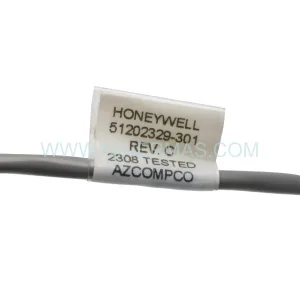
Step 4 — Spare Inspection: Remove the replacement 2MLR-DBST-CC, 2MLR-DBSF-CC, or 2MLR-DBSH-CC from its packaging. Verify the part number label matches the removed module exactly, including the suffix. Inspect the backplane connector for shipping damage. Confirm the module has passed pre-shipment functional testing (NINERMAS test certificate included with shipment).
Step 5 — Installation and Commissioning: Slide the replacement module into the chassis slot until the locking lever engages. Reconnect the field wiring connector. Restore the field supply. On the Safety Manager engineering workstation, confirm that the module is recognized in the correct slot and that all channel diagnostics return to healthy status. Perform a proof test of at least one output channel before releasing the bypass.
Step 6 — Documentation: Update the maintenance management system with the replacement date, new module serial number, and proof test results. File the removed module’s failure analysis report. Update the spare parts inventory to trigger a replenishment order for the consumed spare.
Spare Parts Support FAQ
Q1: Are the 2MLR-DBST-CC, 2MLR-DBSF-CC, and 2MLR-DBSH-CC interchangeable?
A: No. While all three share the same physical form factor and backplane interface, they have different output circuit configurations — standard relay, fused relay, and high-current relay respectively. Always replace with the exact suffix variant to maintain SIL integrity and comply with the original system safety case documentation.
Q2: How do I verify compatibility with my installed Safety Manager chassis version?
A: Cross-reference the module part number against the Honeywell Safety Manager hardware compatibility matrix for your chassis revision. NINERMAS can provide compatibility verification support based on your chassis serial number and firmware version prior to shipment. All modules are tested against known-good reference systems before dispatch.
Q3: What is the lead time and long-term supply commitment for these modules?
A: NINERMAS maintains reserved inventory for the 2MLR-DBST-CC, 2MLR-DBSF-CC, and 2MLR-DBSH-CC to support emergency and planned maintenance requirements. Standard lead time for in-stock units is 3 to 7 business days with express options available. Long-term supply agreements with reserved stock allocation are available for facilities with annual maintenance contracts or multi-site procurement programs.
Q4: What does the 12-month warranty cover?
A: All modules supplied by NINERMAS carry a 12-month warranty from the date of shipment covering manufacturing defects and functional failures under normal operating conditions. Each unit undergoes pre-shipment functional testing with a test report provided upon request. Warranty claims are supported by direct technical liaison with the NINERMAS engineering team.
| Product Series | Safety Manager |
|---|---|
| Country of Origin | US |
Catalog Continuation
More Honeywell modules in the catalog.
Use the brand lane to compare nearby part numbers, platform-adjacent modules, and other inquiry-ready listings before sending your final RFQ.

Catalog Continuation
Alternative parts within SIS Safety & Redundancy Systems.
Stay inside the same system family when you need substitutes, adjacent modules, or a broader shortlist for procurement review.
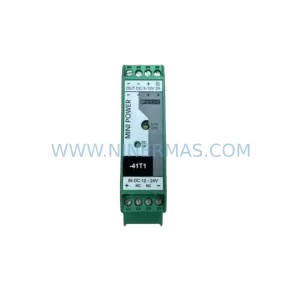
SKU: MINI-PS/12-24DC/5-15DC/2 2320018
Phoenix Contact MINI-PS/12-24DC/5-15DC/2 2320018 DC Power Supply