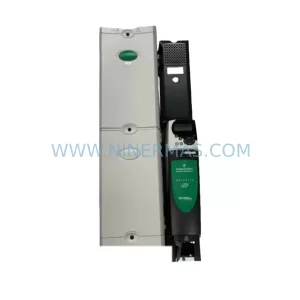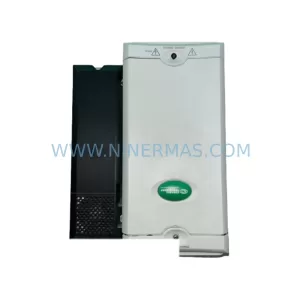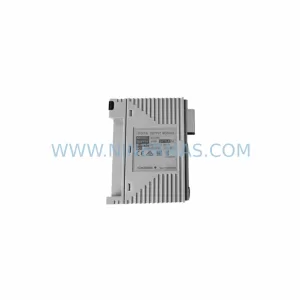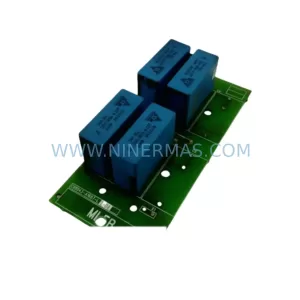
Original Industrial Spare Part
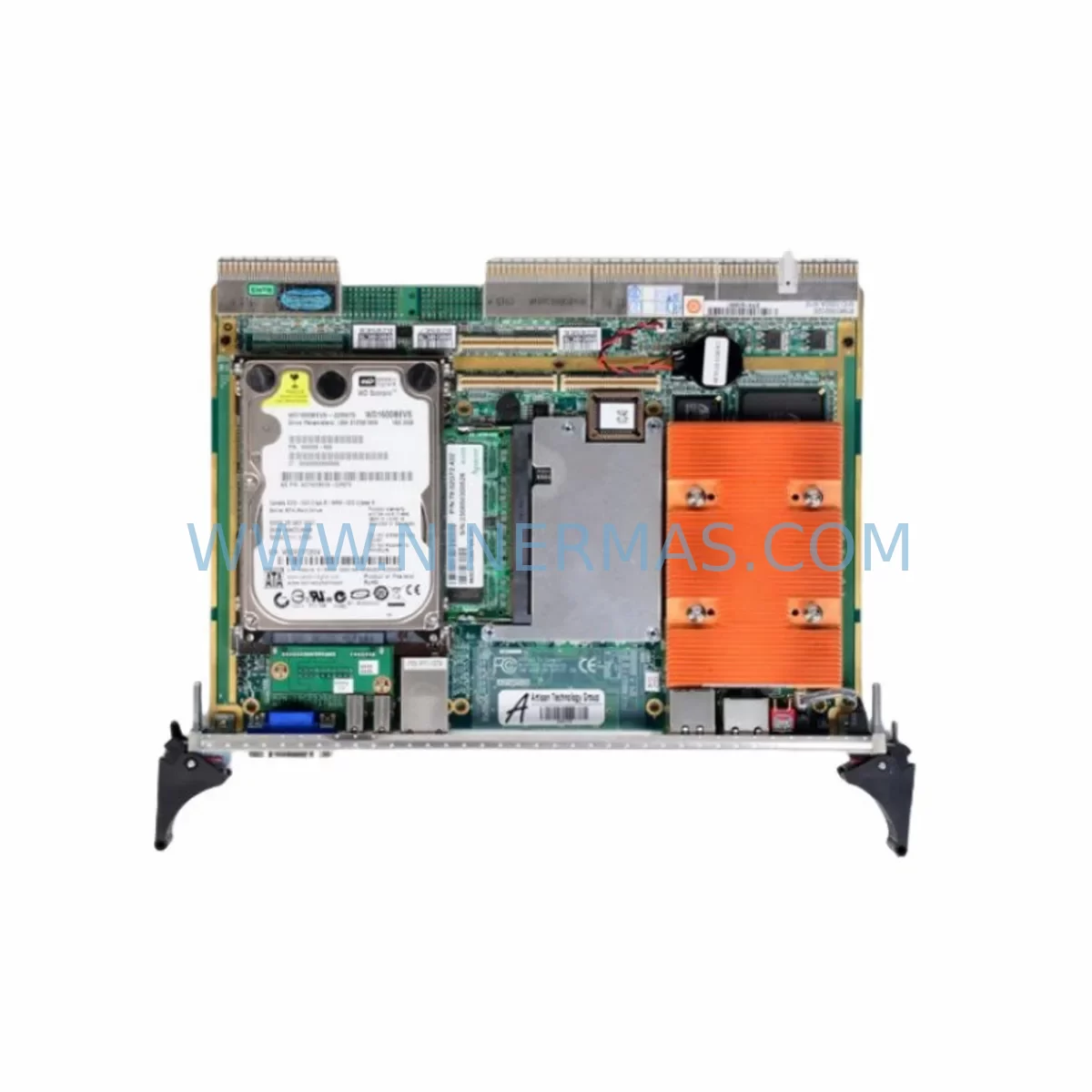
Advantech MIC-3392A Retrofit-Compatible SBC for Legacy Systems
Verify the part, confirm the platform family, and move straight into quotation with the right commercial details.
RFQ Ready
- SKUMIC-3392A
- CategoryDCS Distributed Control Systems
- BrandAdvantech
- SupportAvailability, lead time, condition, and shipping coordination
How Buyers Usually Use This Page
- Confirm the exact part number and platform family before sending the quote request.
- Use direct email when quantity, condition, and destination are already defined internally.
- Switch to the broader brand or category archive when you need alternates nearby.
Series Navigation
Move through the most common platform families behind this part.
Product RFQ
Send this part directly for quotation.
Include quantity, required condition, destination country, and target delivery timing. Current reference: Advantech MIC-3392A Retrofit-Compatible SBC for Legacy Systems with SKU MIC-3392A.
Advantech MIC-3392A Retrofit-Compatible SBC for Legacy Systems
The Advantech MIC-3392A is a high-performance CompactPCI single-board computer engineered for seamless integration into legacy automation environments. As industrial facilities face the growing challenge of maintaining aging control architectures, the MIC-3392A provides a proven, retrofit-compatible upgrade path that preserves existing rack infrastructure, backplane wiring, and control logic while delivering modern processing capability. Whether your facility is managing a phased migration from an end-of-life SCADA platform, replacing a failed processor board in a critical production line, or consolidating multiple legacy controllers into a unified CompactPCI chassis, the MIC-3392A is designed to minimize engineering risk and reduce total downtime exposure.
Sourced directly from authorized distribution channels and subject to full functional verification prior to shipment, each MIC-3392A unit is backed by a 12-month warranty covering hardware defects and operational failures under normal industrial operating conditions. Stock availability is maintained to support urgent replacement scenarios, including emergency procurement for unplanned outages affecting continuous-process industries such as petrochemical, power generation, water treatment, and discrete manufacturing.
Upgrade Compatibility Table
| Parameter | MIC-3392A Specification | Retrofit Notes |
|---|---|---|
| Form Factor | 3U CompactPCI (6HP) | Direct fit into standard 3U CPCI chassis; verify slot pitch before installation |
| Processor | Intel Pentium M / Celeron M | Replaces older MIC-3392 variants; BIOS settings may require reconfiguration |
| Memory | Up to 1 GB DDR SDRAM | Confirm OS memory map compatibility with existing application software |
| Backplane Interface | CompactPCI 32-bit / 33 MHz | Compatible with standard PICMG 2.0 backplanes; check slot J1/J2 pinout |
| I/O Connectivity | 2× USB 2.0, 2× COM, 1× LAN | Verify COM port assignments match existing HMI and field device wiring |
| Operating System | Windows XP Embedded / Linux | Retain original OS image where possible; validate driver compatibility |
| Communication Protocols | Ethernet (10/100), RS-232/422/485 | Confirm protocol stack settings for MODBUS, PROFIBUS, or OPC server links |
| Power Consumption | Typical 25W | Verify chassis power supply capacity; MIC-75M12 power modules may require audit |
| Operating Temperature | 0°C to 60°C | Confirm cabinet thermal management; add ventilation if replacing a lower-TDP board |
| Warranty | 12 Months | Covers hardware defects under normal industrial operating conditions |
Retrofit Planning for Existing Automation Systems
Successful integration of the MIC-3392A into an existing control system requires a structured pre-installation assessment covering power budget, backplane slot allocation, terminal wiring, and software compatibility. Begin by auditing the chassis power supply — in many legacy installations, the original Advantech MIC-75M12 or equivalent CompactPCI power module was sized for the original board’s thermal envelope. If the replacement board draws a different load profile, the power supply must be re-evaluated before commissioning.
Backplane slot addressing is a critical step that is frequently overlooked during rushed replacement projects. The MIC-3392A uses standard PICMG 2.0 slot addressing, but if the original system included a geographic addressing scheme tied to the chassis backplane — common in multi-slot configurations using Advantech CPCI-6880 or similar chassis — the slot ID must be confirmed and, if necessary, reconfigured in the BIOS or system software before the board is powered on.
Terminal wiring and I/O module compatibility should be verified against the existing field wiring schedule. In systems where the MIC-3392A interfaces with distributed I/O over a MODBUS RTU or RS-485 network, the COM port configuration — including baud rate, parity, and stop bits — must match the settings stored in the original controller. If the legacy system used Advantech ADAM-4000 or ADAM-6000 series remote I/O modules, these settings are typically stored in the module firmware and can be read back using ADAM Utility software prior to the board swap.
For facilities running HMI software on a separate panel PC — such as an Advantech IPC-610 or a third-party SCADA workstation — the communication link between the HMI and the CompactPCI controller must be re-validated after the board replacement. This includes confirming the OPC server tag database, verifying Ethernet IP addressing, and testing all critical alarm and interlock screens before returning the system to production. If the HMI communicates via a dedicated serial link to the MIC-3392A’s COM2 port, the cable pinout and signal levels should be confirmed using a breakout box before the first power-on.
In systems where the MIC-3392A is installed alongside Advantech MIC-3395A or MIC-3396A communication modules in the same chassis, the inter-module communication paths — typically over the CompactPCI backplane bus — must be re-initialized after the processor board is replaced. Similarly, if the chassis includes Advantech MIC-3329 or MIC-3328 I/O expansion modules, the module address map stored in the application program must be verified against the physical slot configuration to prevent I/O mapping errors during startup.
Signal isolation requirements should also be reviewed. In environments with high electrical noise — such as motor drive panels, arc welding cells, or high-voltage switchgear rooms — signal isolators installed between the MIC-3392A’s I/O ports and field devices provide essential protection. Confirm that any existing isolation barriers remain correctly rated for the signal types in use. Programming cables used for initial configuration or firmware updates — such as the Advantech PCM-3365 or equivalent USB-to-serial adapters — should be tested on a bench unit before being used in the field to avoid communication errors during the commissioning window.
Downtime Control During System Migration
Minimizing production downtime during a CompactPCI processor board replacement requires careful pre-staging and a disciplined commissioning sequence. The most effective approach is to prepare the replacement MIC-3392A unit fully before the maintenance window begins: load the operating system image, configure BIOS settings, install all required drivers and application software, and perform a bench-level functional test using a spare chassis or test backplane. This pre-staging step eliminates the largest source of unplanned downtime — software configuration errors discovered after the production system has been taken offline.
Before removing the original board, create a complete backup of the application program, HMI project files, and any configuration data stored on the board’s CompactFlash or hard disk. If the original board is still functional, use the live system to export all PLC or control program logic, SCADA tag databases, and communication configuration files. Store these backups on a separate, verified storage medium before proceeding with the physical replacement.
During the physical swap, follow a structured lockout/tagout procedure and document the exact slot position, cable routing, and connector assignments of the original board before disconnection. Photograph the wiring and label all connectors. After installing the MIC-3392A, restore the application software from the pre-staged image, reconnect all field wiring, and perform a systematic I/O check — verifying each input and output signal against the field wiring schedule — before enabling automatic control. This structured approach typically reduces the commissioning phase to two to four hours for a standard single-board replacement, compared to eight or more hours for an unplanned, unprepared swap.
Maintain communication with the operations team throughout the migration window. Establish clear go/no-go criteria before each phase of the commissioning sequence, and have a rollback plan in place — including the original board or a known-good spare — in case an unexpected compatibility issue is discovered during final testing. With proper preparation, the MIC-3392A can be integrated into most legacy CompactPCI systems with minimal disruption to production continuity.
Retrofit Support FAQ
Q1: Is the MIC-3392A a direct drop-in replacement for the original MIC-3392 or MIC-3392B?
The MIC-3392A is mechanically and electrically compatible with the standard 3U CompactPCI slot used by the MIC-3392 and MIC-3392B. However, differences in processor generation, memory configuration, and BIOS version mean that the application software and OS image must be validated on the replacement board before returning the system to production. We recommend a bench-level functional test prior to installation.
Q2: What commissioning steps are required after installing the MIC-3392A in a legacy chassis?
After physical installation, the minimum commissioning steps include: BIOS configuration verification, OS and driver installation or restoration from backup, COM port and Ethernet address configuration, I/O module address map verification, HMI communication link test, and a full I/O functional check against the field wiring schedule. For systems with MODBUS or OPC communication links, end-to-end communication testing with the SCADA or DCS host is also required before enabling automatic control.
Q3: Can the MIC-3392A be used with existing Advantech ADAM remote I/O modules and third-party field devices?
Yes. The MIC-3392A’s RS-232/422/485 COM ports and 10/100 Ethernet interface are compatible with Advantech ADAM-4000 and ADAM-6000 series remote I/O modules, as well as most third-party MODBUS RTU and MODBUS TCP field devices. Communication parameters — baud rate, parity, data bits, and stop bits — must be configured to match the existing field device settings. No hardware modifications to the field wiring or I/O modules are required in most standard retrofit scenarios.
Q4: What does the 12-month warranty cover, and what is the stock availability for urgent replacement orders?
The 12-month warranty covers hardware defects and operational failures under normal industrial operating conditions, including failures attributable to manufacturing defects or component quality issues. It does not cover damage resulting from incorrect installation, overvoltage, or physical impact. Stock is maintained for urgent replacement scenarios, and expedited shipping is available for critical production outages. Contact our team directly for lead time confirmation and emergency procurement support.
| Product Series | Legacy |
|---|---|
| Country of Origin | TW |
Catalog Continuation
More Advantech modules in the catalog.
Use the brand lane to compare nearby part numbers, platform-adjacent modules, and other inquiry-ready listings before sending your final RFQ.
Catalog Continuation
Alternative parts within DCS Distributed Control Systems.
Stay inside the same system family when you need substitutes, adjacent modules, or a broader shortlist for procurement review.