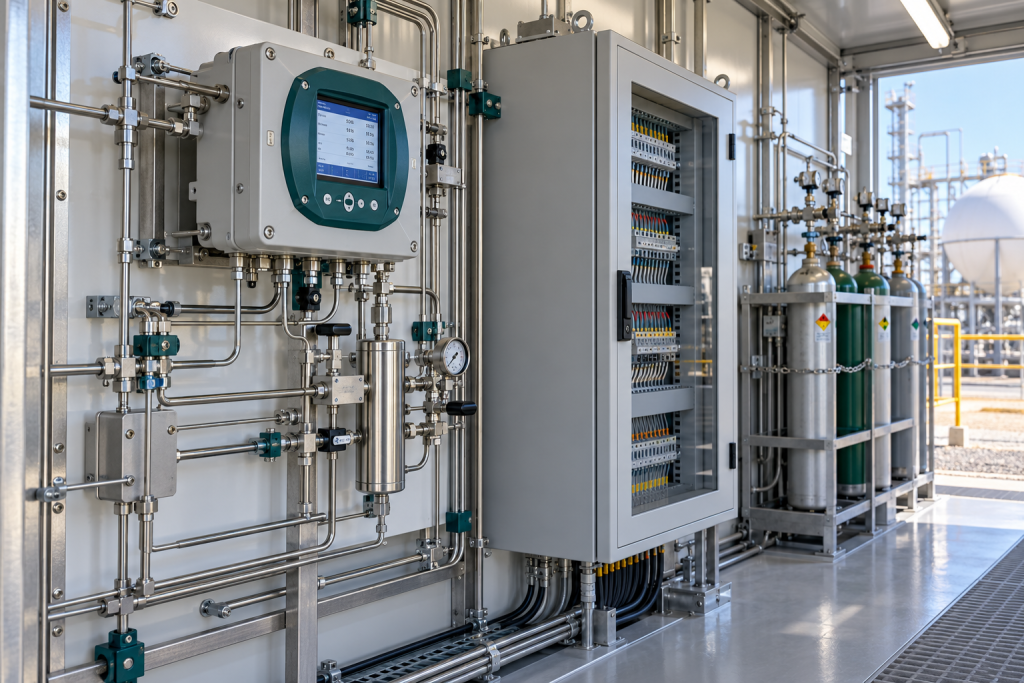
A new analyzer can report a plausible number while the control room interprets the wrong quantity. That is the integration risk worth examining after Yokogawa’s October 16, 2026 announcement of its new OpreX Gas Density Meter. The release highlights a color touchscreen and digital communication. For a plant retaining an established CENTUM installation, however, the important question is not whether the display looks newer. It is whether every consuming application still understands exactly what the measurement represents.
The Yokogawa product announcement distinguishes the initial non-explosion-proof offering from explosion-proof versions planned for April 2027. Neither that schedule nor the new communication options establish that an existing analyzer or DCS input module must be replaced. They create a reason to review the interface specification before defining an upgrade package.
Start with the meaning of the process value
Write down the measured quantity, engineering units, reference conditions and calculation owner. Density, relative density, concentration and a derived heating value are not interchangeable tags simply because they can all be displayed as a number. Identify which device performs each calculation and which assumptions it uses. A successful electrical loop check cannot prove that the process interpretation is correct.
For example, an illustrative project may preserve the old tag name while changing the analyzer’s configured output variable. The current signal can remain inside its expected range, so ordinary bad-signal detection never intervenes. Meanwhile, a trend or calculation consumes a different physical meaning. Prevent that mismatch with an explicit signal contract approved by instrumentation and process engineering, not with a comment added after commissioning.
Keep three interface decisions separate
First decide which signal carries the operational measurement. Then decide how maintenance diagnostics will be retrieved. Finally, identify any independent protection functions and their approved requirements. A digital connection used for diagnostics should not silently become the control value source. Similarly, an ordinary control-system measurement should not be promoted into a protective function merely because a newer instrument provides more information.
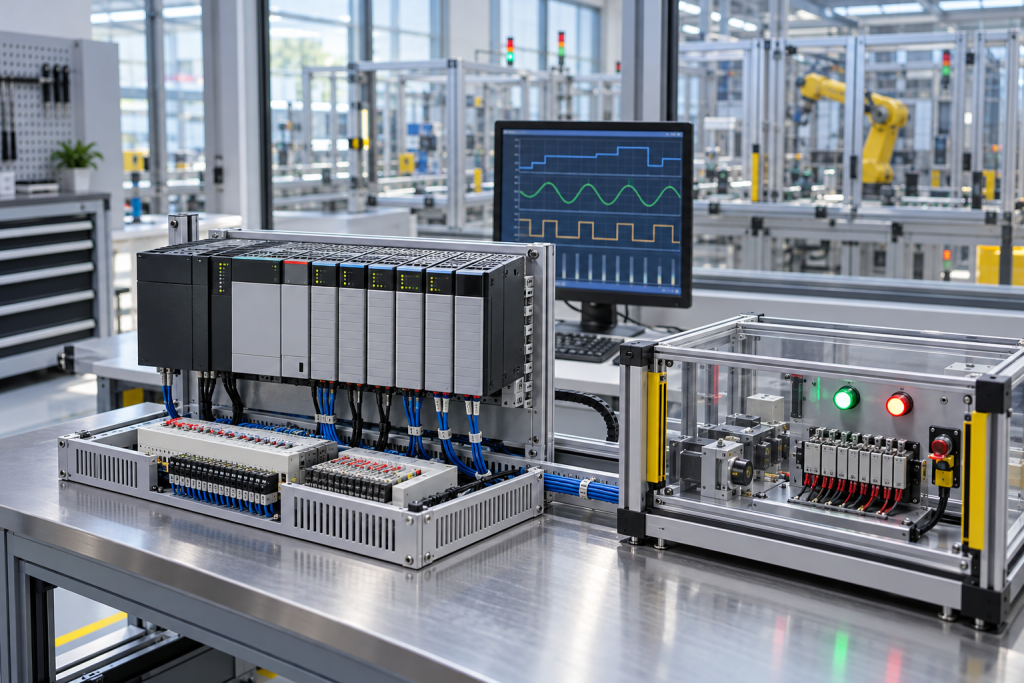
Where a project retains an approved analog interface, the existing input path still matters. The Yokogawa AAI143-S00 S1 analog input module is a relevant spare to identify when that exact variant is installed. Yokogawa’s FIO connection specification lists AAI143 among its 16-channel current-input modules and distinguishes terminal arrangements. This identifies a hardware family; it does not certify a particular new analyzer-to-card connection.
Record the actual terminal block, isolator, loop supply and cable arrangement. Ask whether the proposed instrument output is electrically compatible with that complete path. An Ethernet or RS-485 connection cannot be treated as something an analog input card receives directly. Any digital integration needs its own supported interface, engineering configuration and verification scope.
Design a comparison that exposes interpretation errors
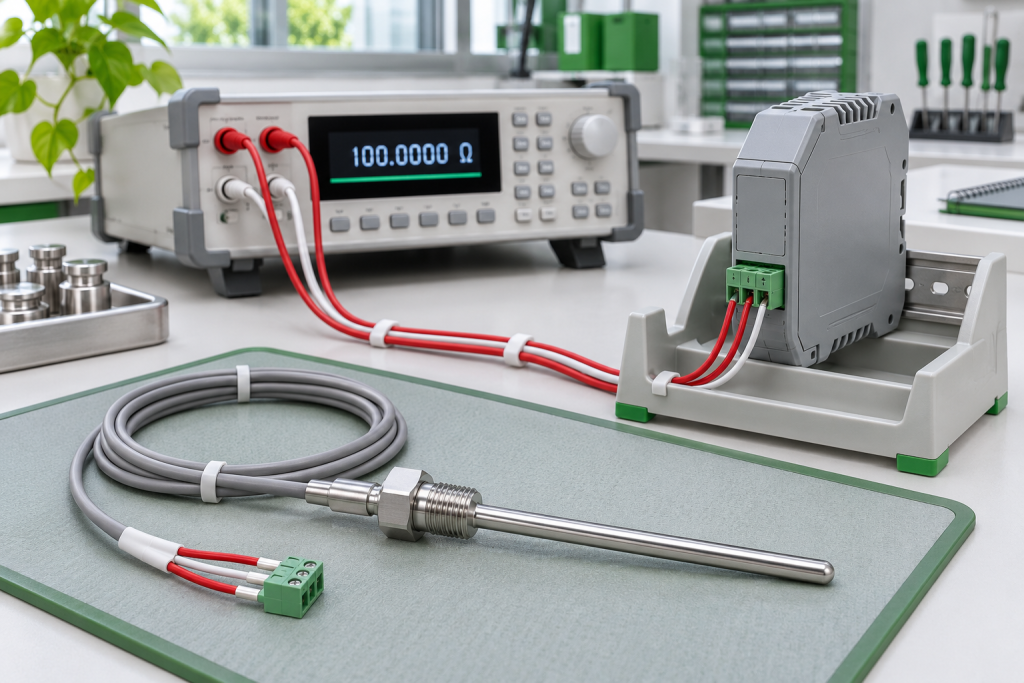
Prepare a comparison sheet with columns for the analyzer indication, transmitted value, DCS raw value, scaled engineering value and downstream calculation result. Define the test points and allowable differences through the project’s approved instrument and process requirements. Do not invent a generic tolerance for every gas or application.
The sheet should include normal operation, a relevant boundary condition and the documented fault or maintenance status. Test how the control-room display distinguishes a current measurement from a held value. Confirm that engineering units and diagnostic quality reach the appropriate display and historian. A frozen but believable number is not equivalent to a healthy reading.
Separate response time from scaling accuracy. Sample transport, analyzer processing, signal filtering and control-system execution each contribute to observed behavior. Faster electronics alone do not establish a faster complete measurement loop. Record which delays were measured and which remain assumptions, particularly where an operator relies on the trend during a transition.
Buy continuity for the installed path
During a phased project, old and new interfaces may coexist. Keep the spare list tied to the retained installation, with an end date for each temporary arrangement. A card removed from the operational rack for commissioning is no longer freely available as an emergency spare, even if the inventory system still counts it.
If the installed design requires HART-capable input hardware, a separate inquiry for an AAI143-H53/K4A00 input assembly must preserve the complete suffix and connection details. The presence of HART in a card description is not evidence that every analyzer output or digital protocol is compatible. Confirm the exact installed combination and system support before accepting an alternative.
Procurement should distinguish the replacement card, terminal accessories and engineering work. Ask for a clear statement of what is supplied and which compatibility questions remain with the plant. This prevents a hardware quotation from being mistaken for an integration commitment. Retain the approved signal contract with the purchase record so future maintenance does not reconstruct it from memory.
Questions from the maintenance desk
Does the new gas density meter mean our existing AAI143 cards are obsolete?
No such conclusion follows from the announcement. Review the retained interface and the exact module’s lifecycle information separately. A new field instrument does not by itself establish an end-of-support date for a DCS input card.
Can we keep the existing tag name after changing the analyzer?
Possibly, but only after confirming the quantity, units, scaling, reference conditions and dependent calculations. Keeping a familiar name without preserving its meaning can conceal an integration error from operators.
Is a good 4-20 mA loop test enough for acceptance?
It establishes only part of the evidence. Also verify the process meaning, diagnostic behavior, downstream use and project-defined response requirements. Electrical correctness and measurement suitability answer different questions.
Should we order a HART variant for every replacement?
No. Order the variant supported by the installed design and required maintenance functions. Additional capability is not a substitute for checking the terminal arrangement, instrument interface and approved system configuration.
Prepare a focused spare inquiry
Send NINERMAS the complete input-module code, terminal details, instrument output specification and intended control-system role. Include whether the requirement is a like-for-like spare or a defined modernization package. That information supports a useful quotation without confusing hardware availability with engineering acceptance.
Image: AI-generated editorial illustration, not an exact product photograph or installation reference.
© 2026 NINERMAS. All rights reserved. Official Website: https://ninermas.com Inquiry: sale@NINERMAS.com | WhatsApp/Tel: +86 187 5021 5667
Next Step
Move the research into a cleaner RFQ.
Send the part number, quantity, condition expectation, destination, and timing details so the sourcing team can reply with better availability and lead-time context.